
I have always been drawn towards non-fiction books and films than fiction. I like to get to the bottom of things and get lost in life’s many systems and patterns. To untangle the reasons we are the way we are and act the way we do.
Lately, I have read 3 books that combined give a good overview and detailed examples of our past, present and where humanity is heading. Let me introduce you to these insightful books.
Sapiens: A Brief History of Humankind by Yuval Harari
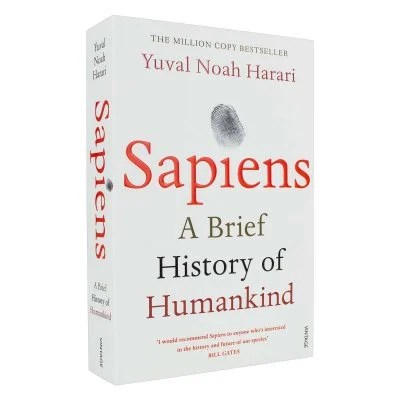
This book takes you through time in 4 sections: The Cognitive Revolution, The Agriculture Revolution, The Unification of Humankind & The Scientific Revolution.
If you are interested to find out how populations merged, when did Homo sapiens domesticate dogs, what made ancient foragers skilful people and what they filled their nutritious meals with. Or how do you cause people to believe in an imagined order such as Christianity, democracy or capitalism? Give this book a go!
“People pursue wealth and power, acquire knowledge and possessions, beget sons and daughters, and build houses and palaces. Yet no matter what they achieve, they are never content. Those who live in poverty dream of riches. Those who have a million want two million. Those who have two million want 10 million. Even the rich and famous are rarely satisfied. They too are haunted by ceaseless cares and worries, until sickness, old age and death put a bitter end to them. Everything that one has accumulated vanishes like smoke. Life is a pointless rat race.”
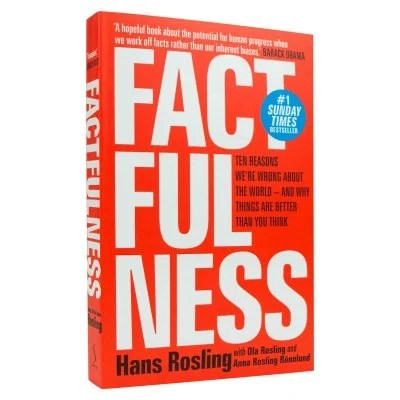
I really enjoyed reading this book, as it was full of facts and figures and real-life examples, also from the author himself.
If even the people who are positioned to run social, economical and humanitarian projects on a worldwide scale get basic questions and perceptions wrong, then I find it’s even more important to educate yourself on those fundamental topics.
#
The author reveals ten instincts that distort our perspective—from our tendency to divide the world into two camps (usually some version of us and them, like developed world and developing world) to the way we consume media (where fear rules) to how we perceive progress (believing that most things are getting worse).
“Think about the world. War, violence, natural disasters, man-made disasters, corruption. Things are bad, and it feels like they are getting worse, right? The rich are getting richer and the poor are getting poorer; and the number of poor just keeps increasing; and we will soon run out of resources unless we do something drastic. At least that’s the picture that most Westerners see in the media and carry around in their heads. I call it the overdramatic worldview. It’s stressful and misleading. In fact, the vast majority of the world’s population lives somewhere in the middle of the income scale. Perhaps they are not what we think of as middle class, but they are not living in extreme poverty. Their girls go to school, their children get vaccinated, they live in two-child families, and they want to go abroad on holiday, not as refugees. Step-by-step, year-by-year, the world is improving. Not on every single measure every single year, but as a rule. Though the world faces huge challenges, we have made tremendous progress. This is the fact-based worldview.”
Tomorrow’s People: The Future of Humanity in Ten Numbers by Paul Morland
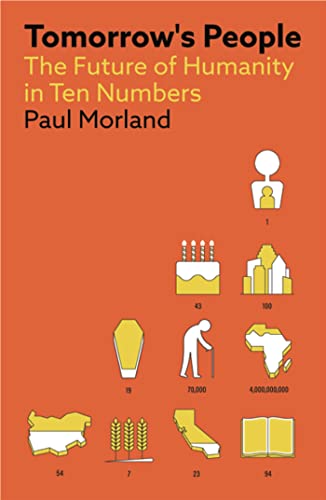
This book made me take out my notebook and write down all the interesting facts that I read and don’t want to forget.
It gives a really good overview with examples of how populations are growing, will there really be too many people on this planet eventually, what can governments do to lower the fertility rate where it is too high, what makes poor countries have more violence and much more.
#
“Where women are given educational opportunities, their fertility rate will usually fall to around replacement level, and where they are not encouraged to combine work with motherhood, their fertility rate will plunge further. Educated women, on the whole, do not wish to have very many children, because they want to pursue their own goals and careers. And when they do have children, they want to ensure that they get a good education and to help them on their way in life, so they concentrate their limited resources on fewer children.”

Leave your thoughts or questions here!